




TUSI AU LEOLEO

TUSI FAITAU ASO

TUSI AU TAUMAFAI
FEAU O LE VAIASO!
(Message of the week)
Tusi Faitau: Esoto 1 : 6-14
Matua: Fp 9 & 10, “Faauta, o le nuu o le fanauga a Isaraelu ua sili ona toatele ma le malosi ia tei tatou; ina o mai ia, ina tatou togafiti poto ia tei latou, nei tupu tele, ona latou tau mai ia i tatou, ma o ese I le nuu nei.”
Manatu Autū: “Fa’ailoga tagata e ‘afua ile fefe”.
I totonu ole tala faasolopito o le lalolagi, e tele ma anoanoai ni mea matuiā ma le matautia, sa mafai ona tutupu a’e ai. O le ola fa’apologaina, o le taotaomia ole saolotoga i nisi o atunuu, o le faailoga lanu e pei ona iai i totonu o Aferika i Saute, o le aiā tatau a tamaitai, ae maise ai o tapu i tapuaiga fou ma talitonuga a le tagata lava ia.
O nei mau fa’afitauli, ua tele ina maumau ai le soifua ma le ola o tagata lautele, pe a fai ae finauina e seisi le aveesea o le ola pologa ma le ola taotaomia.O le tele fo’i o nei fa’afitauli, o loo aliae mai I talitonuga i totonu o sosaiete, e a’afia ai tagata maualuluga, o tagata taualoa o ē o loo umia le malosiaga o le ‘oa ma le tamaoaiga, ma ē o lo’o umia le pule e mafai ai ona o latou aiāina le sa’olotoga o tagata lautele.
Ma atonu o le afuaga lea o loo fausia ai mafaufauga ma tusitusiga a nisi o le au popoto, e pei fo’i o se tasi o tamali’i iloga, lea e suafa iā Karl Marx, lea e fa’apea se tasi o ana mau, “E le’o se mea tatau le fa’atulaga ma vavae sosaiete, auā e lē maua ai se nofo fealofani. O lona uiga, e tatau ona ola tutusa tagata uma. Peita’i! e o’o mai i lenei taeao, fai mai le manatu autu, “Fa’ailoga tagata e ’afua mai ona ole fefe”.
O le tusi lenei o Esoto, o lo’o ua taliaina lava, o le tusi lona lua (2) mai i tusi e lima a Mose, e aofia ai Kenese, Levitiko, Numera ma Teuteronome, a’o le tusi o lo’o fa’auigaina mai ile upu o le gagana Eleni, e uiga tutusa ma le upu, “o ese mai” po’o le malaga ese mai o le nu’u ole Atua mai i Aikupito, le nofoaga na nofo pologa ai.
E amata mai la le tusi, i le faitauga e pei ona iai lenei taeao, o lo’o tatala lava ile toe fa’atepa o le au faitau, i igoa o fanau a Isaraelu, o ē na muamua ona o latou asaina le gasū, e ala i le ta’ita’ina ole nu’u mai ile amataga ole faigamalaga a Isaraelu. O le tala malamalama, na toe manatua ai nisi o augatamā, e pei o Iosefa. Ae fai mai ina ua mavae atu Iosefa ma ona uso, ua mou atu fo’i lea auga-tupulaga muamua sa iai, ona fanafanau lea ma ua uluola le fanauga a Isaraelu, ona tulai mai lea o le tupu fou, ole Farao lona 2, e fa’apea e nate lē iloa le augatupulaga muamua.
Talofa ile loto matāua, le fa’asiliaupule ma le fa’amaualuga. Le popole vale ma le lē mautonu, ua avea ma ala ua fa’atauasoina ai le tagata, ma ua galo ai le so’otaga ma le mafutaga mafanafana sa iai, ina a’o tula’i mai tupulaga muamua o Isaraelu ma Aikupito. Ua moni ai le manatu aoao ole vaiaso, “Fa’amaualuga ma le Fa’ailoga tagata”.
A’o le fesili, fa’ailoga tagata ile a? O le tula’i mai o Farao lona lua (2) e avea ma tupu fou, o iina na amata ai loa ona manu a’e suiga ia, ua i ā te ia le pule ma le malosiaga, ona ia tā vavae eseina lea o ona tagata ma lona nu’u, ma ua ia fa’apea ane, “Fa’auta, o le nu’u ole fanauga a Isaraelu, ua sili ona to’atele ma le malosi ia te’i tatou. Inā tatou togafiti poto ia i a te’i latou.” A mafaufau ile upu togafiti, e pei ona fa’aogaina e le tupu o Aikupito, e leai se fa’amoemoe o se togafiti e iai sona taunu’uga lelei, ae ua na’o se faufauga ina ia fa’atino se galuega ma le fa’amoemoe, ia ta’u maualaloina ai seisi tagata.
Lea la e pei ona iai le vaega ole tala, ua o’o ifo lagona ma ua manatu le tupu i faiga fa’asausili, ina ia manumalo le pule so’ona fai. E ui lava i ni galuega lelei sa faia e Isaraelu ma ona tagata, aemaise o nai o latou tuaā, lea lava ua manino le mata o le vai, ole fefe o Farao, ua fai lea ma ala ua fa’ailogaina ai le tagata ese ma le tagata ole nu’u, ua avea fo’i faiga fa’asausili ma ala ua fa’ailoga ai le Isaraelu ma le Aikupito. A’o a’afiaga ogaoga ia ole fefe ma le atuatuvale, ua lē gata ile tafili saunoa i upu fa’atigā, a ua fa’apea fo’i i galuega mamafa ina ia o’oo’o le ta ole fa’apologaina.
Pau lava lea o le vaega tāua o lo’o fa’ailoa mai ai i lenei tala, ia aua lava ne’i galo le sao o i latou na fitā-i-tuga i le galuega, o ē ua mavae atu, sa fai ma va’aiga a latou galuega e pei o Iosefa ma ona uso, i tupulaga fou ma e ua fai mai, o le ata fa’atusa o le lē fa’ailoga tagata i fa’afitauli e fetaia’i i so’o se ala.
E manatu o lea fo’i se feau toe fagufagu mo itatou ma la tatou ofisa, a’o tatou iai ile fa’aauauina o feau ma galuega, o galuega ma matafaioi tu’u fa’asolo ua au tausagā o galulue ma punonou ai nisi o tamā, o tinā aemaise i latou o e sa mua i malae auā le tautuaina o le Ekalesia.
O le upu a e masani a’i le fa’alogo, e omai tupulaga ma o, lea fo’i ua o’o mai lo tatou taimi, ua ia’i tatou le avanoa e fa’atino ai lau tautua ma sa’u auaunaga, o le fealofani ma le maopopoga o lenei ofisa, e le’o le fa’ailoga tagata, a’o le tutusa o tagata uma. O le fa’amanatu fo’i a le talalelei mo i tatou, e le’o le ita, e le’o le fefe ma le atuatuvale, tatou te faia ai fa’aiuga ma le fa’amoemoe e fo’ia ai fa’afitauli o le ola nei.
I le ma lenei, e iai lava matagi vale ma fa’afitauli e fesouaina ina lo tatou sa folau, peita’i o le fa’amoemoe, ma le fa’alagolago i le mana o le Agaga o le Ali’i, ua na’o le pau lea o le fesoasoani sili e mapu iai le tagata saisaitia, ma to’omaga iai le tagata pagātia.
O Iesu Keriso, o le fa’ataiga lea o le loto maualalo na fa’atinoina ai lana galuega, na o’o lava i le Satauro matagā, n ate le’i fa’apito manū i a tasi, pe na fa’ailoga ni tagata mo lana fa’aolataga, peita’i, na manumalo lona alofa ina ua ia alofaina le lalolagi uma, e ala i lona maliu, ma lona toetū manumalo mai ile oti ma le tu’ugamau, ina ia o saofagā oe ma a’u i lona malo e fa’avavau,
AMENE.
Collin Faletoese (FS)
………………………………………
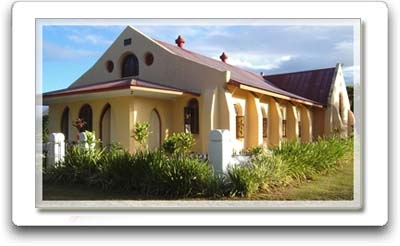
Mission Statement
For more than one hundred and fifty six years, Malua Theological College has provided training for the ministry of the Congregational Christian Church in Samoa. Throughout these years, the College adapted and developed itself to meet the many changes in the life of Church and the Society it serves. However, it was recognised from the outset that the College would be required to develop and adapt to change in a rapidly changing world.
Society’s view and definition of reality have changed and will continue to change as social expectations evolve and new social issues emerge. Traditional values keep on changing as the theoretical and empirical aspects of culture change. In the academic arena, practically all intellectual disciplines, including Theology, are constantly developing their methodological assumptions and methods of interpretation.
It is important that the College continues to develop and adapt itself to these changes as they affect the ministry and the life of the Church. A recent change of importance is the inauguration in 1997 of a degree programme. That change involves a significant development extension of the role of the College. In addition to and complementing the training of ministers for the Church’s congregations (the College’s traditional role), the College now also provides an advanced academic programme offering the degrees of Bachelor of Divinity and Bachelor of Theology, in addition to the Diploma of Theology.
Far from being mutually exclusive, these two features of the College’s role are not only inter-related but are in fact intended to be mutually reinforcing. Thus, since 1997 these have been the double foci of the role of the College. While this new feature of its role does not entail a radical departure from the primary purpose for which the College was established, it is a clear indication that the College is developing and adapting its institutional objectives as the need to do so arise. It also underlines the role of the College as an academic institution. In keeping with this two-fold role, courses at the College, while aiming for an academic standard of excellence will continue to have a practical orientation, and will emphasise aspects that are most relevant to the ministry of the church.
The aim is to provide quality theological education, and to equip student with knowledge and skills necessary for an effective ministry in the Church, a ministry undertaken of course within the constraints of political, economic and cultural structures and inevitably affected by the changes occurring thereto.
The College also aims at a national and international role by fostering and developing close links with other tertiary institutions, by means of staff/student interchanges sharing standards of excellence in spheres of specialisation.
The College is committed to the participation of its faculty members and students in developing and pursuing its objectives, as well as to the principles of equity and equal opportunity in theological education.
For more information please visit www.malua.edu.ws
Tusi Faiaoga Aso Sa & Taitai o Autalavou
2026
 Vasega Amata - Elementary Class
Vasega Feoloolo - Middle Class
Vasega Matutua Faapitoa-Junior Youth
Tusi Aoga Mo Autalavou - Youth
Sunday School Songs
Sunday School Songs
(Note: To save song, right click on DOWNLOAD NOW! and select 'Save link as...')
1. All the colours of the rainbow. DOWNLOAD NOW!
2. Create in me a new Heart. DOWNLOAD NOW!
3. Love is something you give away. DOWNLOAD NOW!
4. Say a prayer in the morning. DOWNLOAD NOW!
Under the guidance of the Constitution set aside by the Church regarding its education system, this Committee in tandem with the office of the Director of Education, is vested the power and prerogative of decision-making and legislation for the development and progress, as well as fulfilling the goals and objectives of Independent State of Samoas Education System.
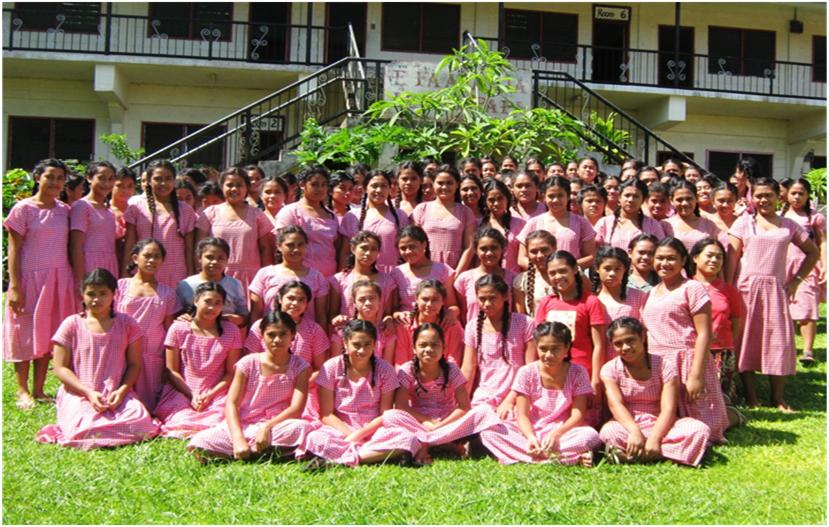
There are 6 secondary schools namely Leulumoega Fou College (LFC), Maluafou College (MFC), Nuuausala College (NSC), Tuasivi College (TSC), Congregational Senior College (CSC) and Papauta Girls’ College (PGC). The Church also has a vocational school called Leulumoega School of Fine Arts (LFA). All schools come under the administration of the church education portfolio and usually enrolls close to 3000 students every year.
The year 2012 saw a huge jump in the student roll for these six schools, the direct result of progressive administration and commitment of the Church through its Board of Education.
The education department takes pride in its ability to provide transparency and accountability in its administration procedures and plans set aside for CCCS schools. The success of the church schools in the overall education system of our society is a direct result of consistent consultations and support given to principals and teachers where necessary. The CCCS education department and school system as a whole is a firm believer and a huge advocate in the spiritual well-being of students and the drive to alleviate and eliminate crime and violence within our society, hence the drive to produce and support religious learning as a major part of its curriculum planning and implementation. The Religious Knowledge syllabus is firmly in place and thoroughly reviewed every year and taught as a compulsory subject in all of the CCCS schools.
WORKFORCE: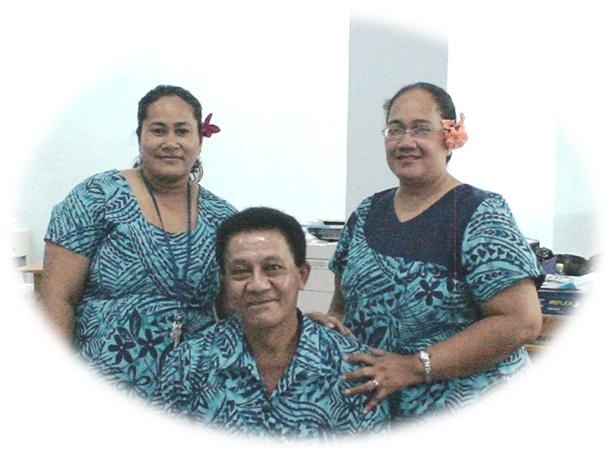
As a non-governmental organization or institution, the education system of the CCCS employs more than 200 workers to fulfill the goals and aspirations of the schools and the Church itself. Of this number, 155 classroom teachers including 6 principals, with the strong drive to attract enough skilled teachers to fulfill the ongoing needs of the school catered for by the Church. Like any other educational institution, there is always a shortage of specialized teaching personnel very much needed to cater for the advanced and special areas of learning. And thus the drive by the Board and department of education to contract teachers from overseas as well as send suitable teachers to the National University of Samoa to train under the scholarship system of the CCCS in their specialty areas.
The constitution set side by the Church and the Manual of Instructions compiled by the Board of Education, provides the platform for all the Church employees to operate from as well as the structure and framework of the education department and schools. Operations in every component of the system run on well-oiled wheels because the procedures, policies and regulations specified within the constitution and manual must be adhered to at all times.
INITIATIVES:
EMPLOYMENT OPPORTUNITIES:
The Education Department policies and procedures for accepting and enlisting its employees are consistent with those employed by the government and any other institution. Employees are selected by the Board of Education based on skills and capability as well as potential to fulfill the needs of the schools and able to adhere to the Church expectations and policies. The department through the approval of the Board aims to provide the best opportunity and support to every teacher or anyone under its employment by enforcing further trainings and financial support through its salary package on top of many other sources. The Department of Education is always welcoming and has always been under its procedures and manual of instructions, a great advocate of equal opportunities and development of teachers and employees in any area where assistance is required. The door is left open to anyone who is prepared to serve the church and contribute to the betterment of education for the students under the tutelage of the church schools. The goal of advancing teacher development and progress is carried out through consistent monitoring and feedback from the Education Department as well as through a teacher performance appraisal done twice a year.
ASPIRATIONS:
The Congregational Christian Church puts a lot of emphasis on quality learning and in every opportunity enforces quality assurance in its quest to provide the best education to the youth of Samoa. As a great advocate of the physical, social and spiritual well-being of the youth, the security of the young people and provision of quality learning have been priorities of the CCCS through its education department hence the readily available quality resources available at the schools. The education department seeks to create and maintain the most secure foundation of learning and positive working atmosphere to every student and employee from any denomination within the system in accordance with the constitution and aspirations of the Church and its schools. Notwithstanding the many and varied responsibilities of the Congregational Christian Church of Samoa, the Education Department and welfare of the schools continue to be a major priority and passion hence the continuous drive to aspire and achieve at the highest level and with the best facilities available to the students.
ACHIEVEMENTS:
Like any other educational system, good performance and successful achievement are the driving forces behind every venture or goal set for its schools and learning institutions. The education department takes pride in the achievement of schools under its administration and ensures constant support is readily available at all times. Schools belonging to the Church have continuously excelled both academically and in every area of learning in sports such as rugby, netball, cricket and athletics and takes pride in their prominent performances and achieving at the highest level in sports.
The number of students qualified for the national university continues to increase every year as the CCCS Education Department puts more and more emphasis on the academic development of both teachers and students. There is obviously a lot of constructive competition among the CCCS schools as a result of programmes put in place by the Education Department and the Board of Education to enhance individual performances and support school achievement. As well, local competitions conducted by various government organizations and ministries such as Battle of the Minds, Science Fair and many others have seen CCCS schools featuring quite prominently and a force to be reckoned with.
This year, the School of Fine Arts at Leulumoega Fou College was accredited and recognized as a training provider by the Samoa Qualification Authority, and this is translated into the fact that qualifications from this training centre of the Congregational Christian Church Samoa are officially recognized both nationally and internationally. This is a giant leap into achieving the CCCS goal of providing employment opportunities for our young people who are struggling academically and could not make it to the university level.
Through the CCCS enthusiastic support and strong drive to provide the best for its schools and ensuring that our students learn and develop in the best environment possible, our schools will continue to thrive and operate at the highest level.
© 2026 CCCS